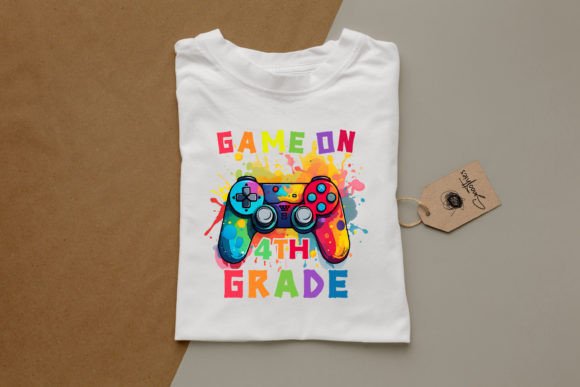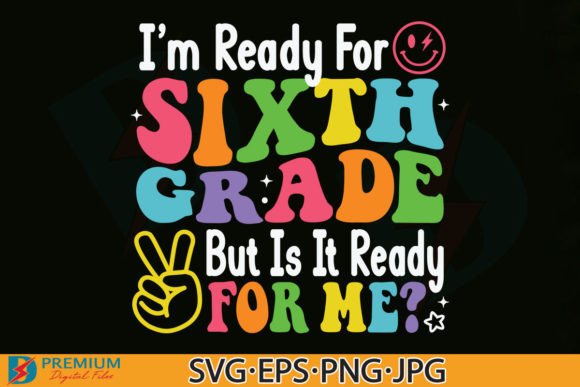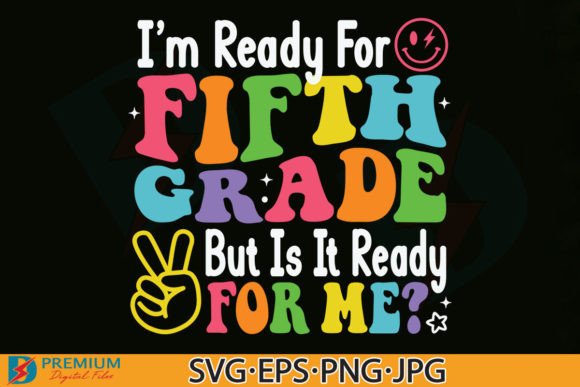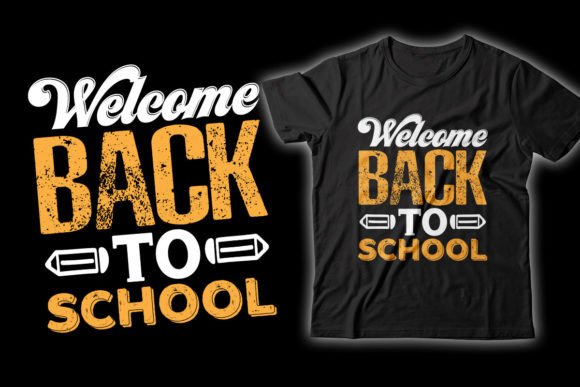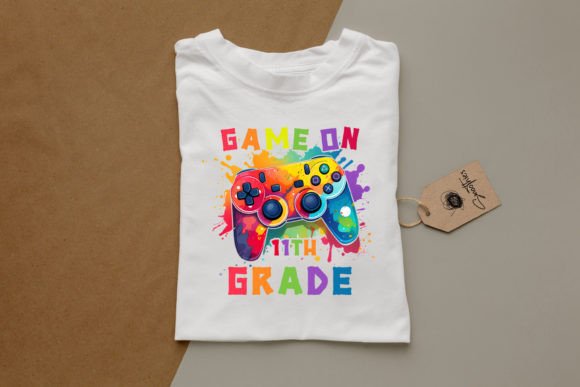
Back to School Game on 11th Grade: A Practical Resource for Educators, Parents, and Creative Learners
The Back to School Game on 11th Grade is a digital design resource tailored specifically for the academic and developmental context of eleventh-grade students. Unlike generic back-to-school graphics or broad-themed classroom materials, this asset reflects the unique tone, expectations, and milestones associated with junior year—college preparation, standardized testing, advanced coursework, and emerging independence. It’s delivered as a high-resolution PNG file (4000×4000 pixels, 300 dpi) with a transparent background, making it technically versatile across multiple physical and digital applications.
What Sets This Design Apart from General Back-to-School Assets
Most back-to-school digital products fall into two categories: age-agnostic clipart bundles or grade-specific lesson plans. The Back to School Game on 11th Grade occupies a narrower, more intentional niche—it’s not instructional content, nor is it purely decorative. Instead, it functions as a thematic anchor: a visual shorthand that signals relevance, maturity, and purpose to an 11th-grade audience. Its design language—whether through typography, composition, or implied symbolism—avoids childish motifs while still conveying warmth and encouragement.
This distinction matters when selecting resources for real-world use. For example, a teacher preparing orientation materials for juniors may find generic “back to school” banners visually mismatched with the seriousness of AP course selection meetings or college counseling timelines. In contrast, a design explicitly labeled and styled for 11th grade communicates alignment with student identity and institutional expectations.
Practical Applications—and Where It Fits Best
The included PNG file supports a wide range of tangible outputs: t-shirts for grade-level spirit days, mugs for faculty welcome kits, wall art for college readiness centers, stickers for student planners, sublimation-printed pillowcases for dorm rooms, or framed prints for counselor offices. Because it includes transparency, layering over photos, textures, or solid-color backgrounds is straightforward in most editing tools—even beginner-friendly ones like Canva or Cricut Design Space.
However, its utility depends on your intended workflow:
- If you plan to cut vinyl or heat-transfer material: Note that no SVG, DXF, or cutting files are included. You’ll need to manually trace or convert the PNG—or source supplemental files separately.
- If color accuracy is mission-critical: Device screens and printer models render RGB and CMYK differently. What appears vibrant on a MacBook Pro may shift slightly on a Canon PIXMA or Epson sublimation printer. Always soft-proof or test-print before large batches.
- If you need editable text or layered components: The file is flattened. You cannot change slogans, rearrange elements, or adjust individual layers without raster editing skills and software like Photoshop or Affinity Photo.
How It Compares to Alternative Approaches
When evaluating options, consider three common alternatives: custom illustration commissions, subscription-based design libraries, and free or low-cost public domain assets.
Custom illustrations offer full control over messaging, style, and scalability—but typically cost $200–$800+ and require weeks of turnaround. The Back to School Game on 11th Grade delivers immediate access at a fraction of that cost, with professional-grade resolution and intent-built relevance. It trades bespoke flexibility for speed and thematic precision.
Subscription libraries (e.g., Adobe Stock, Creative Market bundles) provide variety but often lack grade-specific nuance. Searching for “11th grade” yields few results; most returns are either too young (cartoonish, elementary-focused) or too generic (“school,” “education,” “learning”). Finding something that resonates with juniors—without requiring heavy editing—can take substantial time. This asset eliminates that search friction.
Free resources carry hidden tradeoffs: inconsistent DPI, watermarks, restrictive licenses, or unclear usage rights—especially for commercial printing or resale items like fundraiser merchandise. The Back to School Game on 11th Grade includes clear, permissive usage terms for both personal and small-business contexts, assuming standard printing methods (sublimation, waterslide, inkjet/laser).
Realistic Use Cases and Decision Factors
Here’s how educators, parents, and small creative businesses have applied this type of asset:
- A high school counseling department printed 50 copies on matte cardstock, laminated them, and used them as “Welcome Back, Class of 2026” handouts during summer bridge sessions.
- A PTA group paired the design with a local print shop’s sublimation service to create matching tote bags for junior-year mentorship program volunteers.
- An independent tutor designed a series of printable study-planner pages, embedding the graphic subtly in headers to reinforce grade-level focus without overwhelming layout.
- A student-led entrepreneurship club used the file to brand limited-run hoodies sold at a college prep fair—leveraging its recognizability among peers while maintaining visual cohesion with their event theme.
These examples highlight where the Back to School Game on 11th Grade adds measurable value: when consistency, timeliness, and contextual resonance matter more than absolute uniqueness. It’s especially useful when launching initiatives with tight deadlines—or when supporting students who benefit from clear, affirming visual cues tied to their current academic stage.
Limitations to Acknowledge Upfront
No single digital asset solves every need. Key limitations include:
- No multilingual or accessibility adaptations: The design assumes English-language use and doesn’t include alt-text-ready versions, braille overlays, or high-contrast variants.
- Fixed composition: While scalable, the layout isn’t modular—you can’t isolate icons, swap fonts, or reposition core elements without raster editing.
- Print-method dependency: Though optimized for sublimation and waterslide, results vary with paper stock, ink type, and heat press calibration. Matte finishes tend to preserve detail better than glossy for fine-line elements.
When It’s the Right Choice—and When to Look Elsewhere
Choose the Back to School Game on 11th Grade if you need a ready-to-use, grade-aligned visual asset that balances professionalism with approachability—and if your goal is efficient implementation across apparel, décor, or printed collateral.
Consider other options if:
- You require ADA-compliant formats (e.g., SVG with embedded ARIA labels), in which case working with an inclusive design specialist may be more appropriate.
- Your project demands multiple variations (e.g., “11th Grade STEM Edition,” “11th Grade Arts Focus”)—a custom illustrator or design system approach would scale better.
- You’re building long-term branded materials across all four high school grades and want consistent visual language. In that case, investing in a cohesive style guide + template set may yield stronger continuity than purchasing individual grade-specific files.
In summary, the Back to School Game on 11th Grade serves a specific, well-defined function: bridging intention and execution for audiences invested in the junior-year experience. Its strength lies not in universality, but in fidelity—to grade level, to practical application, and to the quiet significance of this transitional year in a student’s academic journey.