Sixth Grade SVG, Retro 6th Back to School: A Practical Asset for Educators, Makers, and Small Business Owners
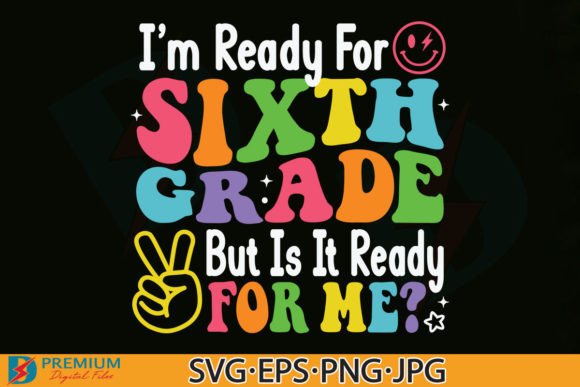
When planning back-to-school projects—whether for classroom decor, student welcome kits, custom apparel, or small-batch merchandise—the Sixth Grade SVG, Retro 6th Back to School design set bridges intention and execution. It’s not just a graphic; it’s a production-ready asset built into real-world creative and operational workflows. Its retro aesthetic resonates with nostalgia while its file structure supports flexibility across platforms—from lesson planning to print-on-demand fulfillment.
How This Design Set Fits Into Your Workflow
This isn’t a standalone decoration. It’s a modular component that slots into stages of a broader process: preparation, production, and personalization. For educators, it might appear early in August during classroom setup—used to label supply bins, personalize name tags, or create bulletin board accents. For crafters and small business owners, it becomes part of a product development cycle: selected during mockup phase, tested across substrates (mugs, tumblers, vinyl), then scaled and recolored based on seasonal inventory or customer requests.
Because the package includes both grouped and ungrouped SVG files, users can choose their level of control. Grouped SVGs preserve layout integrity for quick cuts in Cricut Design Space—ideal when time is tight and consistency matters. Ungrouped versions allow layer-by-layer editing: swapping out “6th” for “Grade 6”, adjusting spacing for curved surfaces like water bottles, or isolating elements for embroidery digitizing prep.
File Types and Their Real-World Roles
The seven included files serve distinct functional purposes—not redundancy, but workflow coverage:
- 2 PNG files (300dpi, transparent background): Use these for digital presentations, editable PDF handouts, or layered mockups in Canva or Photoshop. They’re resolution-stable for printing posters or laminated desk tags without pixelation.
- 1 PNG (Cricut/Silhouette-optimized): Designed specifically for cutting machines, this version avoids anti-aliasing artifacts that can confuse blade path detection. It saves calibration time and reduces material waste during test cuts.
- 1 JPG (300dpi, white background): Ideal for web previews, social media announcements, or client proofs where transparency isn’t needed—and where platform restrictions (e.g., some email clients) require flat formats.
- 1 EPS vector file: The universal fallback for professional print shops. If you’re outsourcing t-shirt screen printing or large-format banners, EPS ensures crisp output at any scale without font dependency or raster degradation.
- 1 SVG Group file & 1 SVG Ungroup file: These aren’t duplicates—they’re workflow branches. Grouped = speed and fidelity. Ungrouped = adaptability. Choose based on whether your next step is “cut now” or “edit first.”
Compatibility Is a Planning Step—Not an Afterthought
Before importing into Cricut Design Space, Silhouette Studio, Adobe Illustrator, or Inkscape, verify software version support. Older versions may not render newer SVG attributes correctly—especially those related to transparency blending or embedded fonts. If you're using Silhouette Studio Business Edition, the ungrouped SVG will behave predictably; if you're on the free edition, test the Cricut-optimized PNG first to avoid unexpected layer flattening.
For educators integrating this into Google Slides or Microsoft PowerPoint: paste the high-res PNG, then use built-in cropping and recolor tools rather than trying to convert SVGs externally. That keeps file size manageable and avoids compatibility hiccups during staff training or shared drive collaboration.
Implementation Tips That Save Time and Reduce Rework
Start with substrate testing. Print or cut one element on your target material before scaling up. A retro “6th” badge looks sharp on matte sticker paper—but may bleed slightly on glossy vinyl unless you adjust cut pressure or ink saturation. Document those settings in a shared team sheet or Notion database so future batches replicate quality.
Color strategy matters beyond aesthetics. The retro palette (think mustard yellow, olive green, burnt orange) works well for readability against light backgrounds—but test contrast ratios if using for accessibility-focused materials (e.g., IEP visual schedules). Tools like WebAIM’s Contrast Checker help ensure text remains legible at 12pt size.
Organize files by use case—not format. Instead of folders named “PNG” or “SVG”, try “Classroom Labels”, “Apparel Mockups”, and “Digital Handouts”. Then drop the relevant file type into each. This mirrors how you’ll actually retrieve assets mid-task, reducing cognitive load during busy periods like the first week of school.
Where This Fits Across Roles and Goals
Educators use the design as part of a larger classroom management system—pairing it with editable seating charts or behavior trackers. The consistent visual language reinforces grade-level identity without requiring custom illustration work each year.
Craft entrepreneurs treat it as a foundational SKU in their back-to-school catalog. Because the files are scalable and color-flexible, they can produce matching mugs, stickers, and tote bags from one source—reducing design overhead and enabling coordinated product bundles.
Freelance designers incorporate it into client proposals for school-related branding projects. Having a vetted, multi-format retro sixth-grade asset means faster turnaround on mood boards or style guides—especially when clients need options that feel nostalgic but not dated.
Hobbyists and parents appreciate the instant-download nature for last-minute needs: a birthday party banner for a rising sixth grader, a custom backpack tag, or a framed “I Survived 6th Grade” print. No waiting for shipping—just unzip, open, and apply.
Long-Term Usability Considerations
This isn’t a one-season purchase. The retro aesthetic avoids trend-driven obsolescence—unlike hyper-current fonts or filters that date quickly. You can reuse the core vector shapes across years by simply updating colors or pairing them with new complementary icons (e.g., adding a rocket or graduation cap in 2025).
Store the original ZIP in a cloud-synced archive folder labeled with the purchase date and license terms. Re-download links often expire after 30 days—so having a local backup prevents disruption if you need to reimport after a laptop reset or team onboarding.
Also note the usage boundaries: this is licensed for personal and commercial *physical* output—not redistribution as a digital file. That means you can sell the mug you printed, but not the SVG itself—even as part of a larger bundle. Understanding that distinction protects your business from licensing risk and aligns with industry-standard digital asset practices.
Final Thought: Integration Over Isolation
The value of Sixth Grade SVG, Retro 6th Back to School lies not in what it is, but in how smoothly it connects to what you already do. It doesn’t replace your lesson plans, your shop workflow, or your design process—it streamlines them. Whether you’re prepping five minutes before homeroom or batching 50 orders for an Etsy launch, the right file type, at the right time, in the right format, removes friction instead of adding it. That’s how practical assets earn long-term space in your toolkit.